
So, do mosquito sprays reduce malaria? The honest answer depends on which product you mean. For a newer class of devices called spatial emanators, the World Health Organization (WHO) recommended them in 2025 as an extra layer on top of bed nets. The ordinary knockdown aerosol sprayed before bed hasn’t been shown to lower malaria on its own. It clears a room of mosquitoes at that moment, which is a useful but different job.
Why This Question Matters in Nigeria
Nigeria carries more of the world’s malaria than any other country by a wide margin, and WHO’s World Malaria Report 2025 estimates 282 million malaria cases and 610,000 deaths worldwide in 2024, with Nigeria accounting for about 24% of those cases and about 30% of the deaths. Across Africa, most malaria deaths are in children under five.
Malaria prevention Nigeria households rely on mixes nets, sprays, coils, plug-ins and home remedies. Retailers present all of them as malaria prevention products, so it’s fair to ask which actually lower the chance of illness.
What Counts as Evidence Here
Most claims about mosquito spray malaria risk blur two very different kinds of results.
The first is about mosquitoes. Does the product kill or repel them, or cut bites in a test room? A lot of them pass that test. The second is about people. In a real community, over months, do households using the product get malaria less often? Answering that takes large field trials that track infections over time.
Only the second kind tells you about malaria, because a spray can kill every mosquito in a test chamber and still change nothing about how many children fall sick that season.
What the Evidence Supports
Insecticide-Treated Nets: the Established Baseline
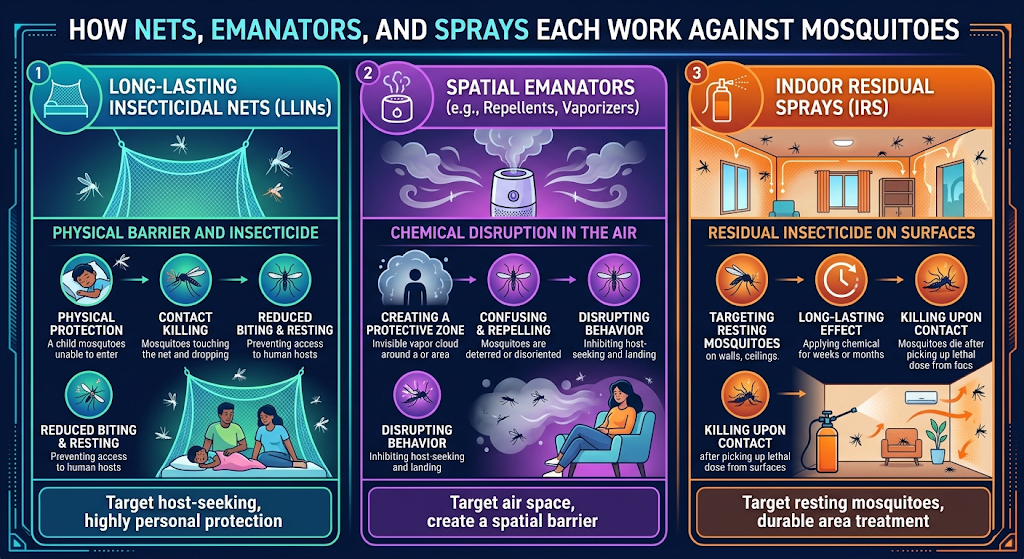
Nets are the most proven household tool against malaria. Decades of research on insecticide treated nets malaria outcomes, including large randomised trials, found fewer cases and fewer child deaths where people slept under them. Nets cover the hours when malaria mosquitoes do much of their biting, they need no power, and once the net is tucked in they keep working until morning.
Spatial Emanators: a New Recommendation
The most recent WHO mosquito protection recommendation came on 13 August 2025, when WHO recommended spatial emanators as a new class of intervention for malaria vector control, the first new class in over a decade. These devices release active ingredients into the air to kill mosquitoes, keep them out of treated spaces, and stop them from finding and biting people.
The recommendation is conditional, for indoor use in addition to insecticide-treated nets, in children and adults, in areas with ongoing transmission. It rests on moderate-certainty evidence from five studies that assessed passive emanators and mosquito coils against malaria. WHO adds that emanators may offer some protection during the day, when people are awake at home and not under a net.
Do plug-in repellents prevent malaria too? Plug-in vaporisers also release insecticide into the air repelling mosquitos in the process.
Knockdown Aerosols: Useful, but a Different Job
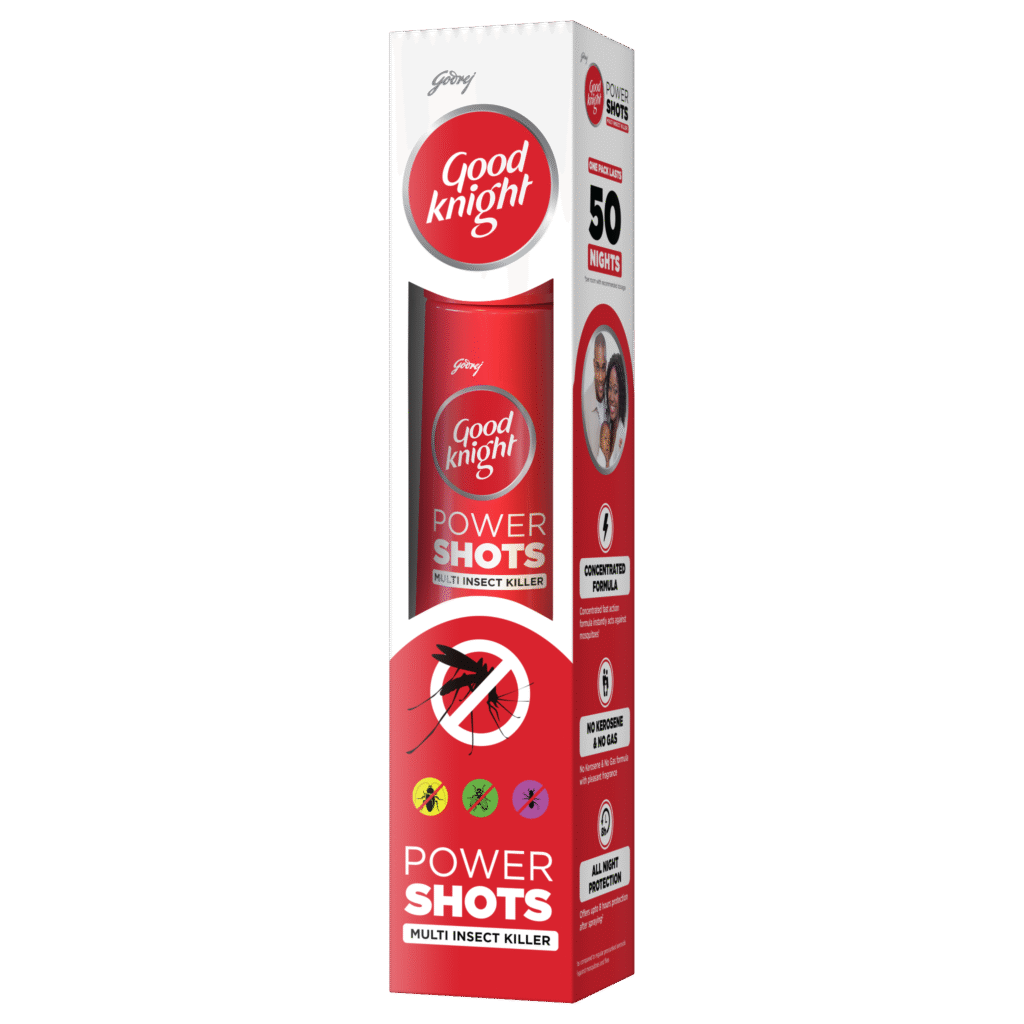
A knockdown aerosol kills the mosquitoes in the room when you spray, and some keep working for a stated number of hours, which means fewer bites that evening.
What it isn’t, on current evidence, is a malaria intervention. Does insecticide spray prevent malaria, then? Yes, but the answer is also not that simple..
Fewer Bites Is Not the Same as Less Malaria
This is the gap most marketing skips.
Malaria spreads through infected bites, and it’s the number of infected bites a person gets over weeks and months that shapes their risk. Most of those bites happen between dusk and dawn, with malaria-carrying Anopheles mosquitoes often active late at night and in the early hours.
Picture a product that clears the bedroom at 8pm and then fades. By 3am the protection has faded, someone has opened the door to check the generator, and mosquitoes have drifted back in. The evening felt better. The hours that matter most for malaria, though, were left uncovered.
That’s why protection has to run through the whole night to affect malaria, and why nets and plugins like Goodknight Activ+, sitting between you and the mosquito until morning, remain the baseline. Fewer bites at 9pm is worth having, but it measures something different from fewer malaria cases.
What This Means for Your House Tonight
If the question is what actually prevents malaria at home, the answer with the most evidence behind it is the net, and the indoor mosquito protection evidence as a whole points to layering around it.
Alt text: “Layered mosquito protection in a Nigerian bedroom”
Everyone should sleep under an insecticide-treated net every night, above all children under five and pregnant women, with the net checked for holes and tucked in. Close doors and unscreened windows before dusk, and empty standing water around the compound every week.
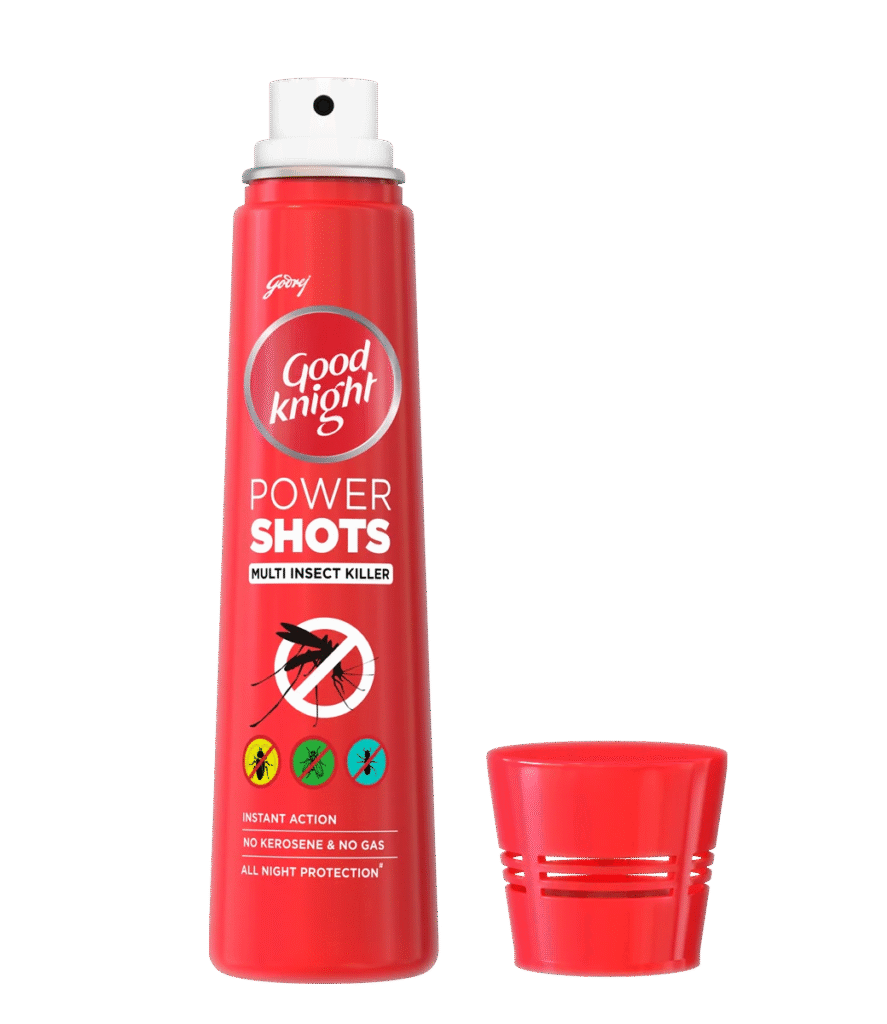
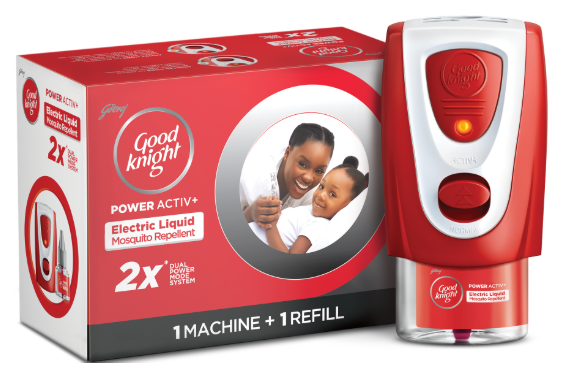
Then add the comfort layer. GoodKnight Power Activ+ is a plug-in vaporiser used indoors through the night, with a normal mode and a stronger Activ+ mode. GoodKnight Power Shots clears a room quickly, acting instantly on mosquitoes, which suits evenings and power cuts, when the plug-in stops. Their job is fewer mosquitoes and fewer bites in the room, and both are in the GoodKnight range at The Diva Shop.
If anyone at home develops a fever, get a malaria test promptly, because no mix of prevention removes the risk completely.
FAQs
Do mosquito sprays prevent malaria?
Knockdown mosquito sprays have not been shown to prevent malaria on their own. They kill mosquitoes in a room and reduce bites for a time, but malaria protection needs cover through the whole night. Insecticide-treated nets remain the most proven household tool.
What is the most proven way to prevent malaria at home?
Sleeping under an insecticide-treated net every night has the strongest evidence for reducing malaria cases and child deaths. Since August 2025, WHO also conditionally recommends spatial emanators, used indoors in addition to nets, in areas with ongoing malaria transmission.
Do plug-in repellents reduce malaria risk?
The trials behind WHO’s 2025 spatial emanator recommendation assessed passive emanators and mosquito coils, not electric plug-in vaporisers. Plug-ins can reduce mosquitoes and bites indoors while they have power, but they should be used alongside a treated net, never in place of one.
The Honest Summary
Nets come first. Spatial emanators are now a WHO-backed extra layer where approved products are available. Sprays and plug-ins earn their place by cutting bites, as long as nobody mistakes them for the whole plan. For that layer, the GoodKnight range at The Diva Shop has a spray and a plug-in.